
Can You Delay a Root Canal? What Happens If You Wait
- 1. What Is a Root Canal - and Why Would You Need One?
- 2. Common Signs You May Need a Root Canal
- 3. What Happens When You Delay a Root Canal?
- 4. How Long Can You Actually Wait?
- 5. Will Antibiotics Buy Me More Time?
- 6. Is a Root Canal Really That Bad?
- 7. The Cost of Waiting vs. the Cost of Treating
- 8. When to Call NS Family Dental
- 9. Frequently Asked Questions
- 10. Do Not Wait - Schedule Your Appointment Today
Can You Delay a Root Canal? What Happens If You Wait
You’re sitting in the dental chair and your dentist has just told you that you need a root canal. Maybe the idea makes you nervous. Maybe you are concerned about the cost, the time, or the procedure itself. It is tempting to think: should you just wait a little longer?
The honest answer is that while you can delay a root canal, you almost certainly should not. A tooth that needs this treatment is already in trouble – and without intervention, that trouble will grow. At NS Family Dental in Chicago, Dr. Naser Abdelsalam regularly sees patients who waited too long, and the consequences are nearly always more painful and more expensive than the root canal itself would have been.
This article walks you through what a root canal is, why delays are dangerous, how quickly a dental infection can progress, and what your treatment options look like at our Englewood, Chicago, IL office.
What Is a Root Canal - and Why Would You Need One?
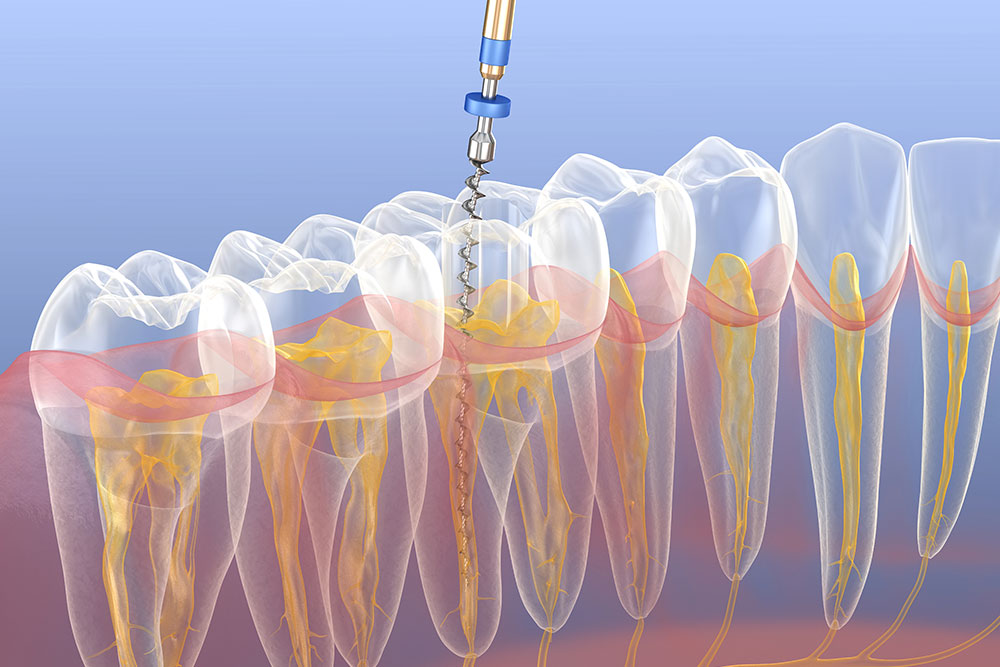
A root canal is a procedure used to treat a tooth whose inner pulp – the soft tissue containing nerves, blood vessels, and connective tissue – has become infected or severely inflamed. This can happen due to:
- Deep or untreated tooth decay
- A cracked or fractured tooth
- Repeated dental procedures on the same tooth
- A traumatic injury to the tooth
When the pulp becomes infected, the infection does not stay contained. It spreads – and when it does, the results can be serious. Root canal therapy removes the infected pulp, cleans and disinfects the canals inside the tooth root, and seals the tooth to prevent reinfection. In most cases, a dental crown is then placed over the tooth to protect its structure and restore full function.
Common Signs You May Need a Root Canal
Not every patient recognizes immediately when a root canal is needed. Some signs are obvious; others are easy to dismiss or attribute to something else.
| Symptom | What It May Indicate |
|---|---|
| Persistent or severe toothache | Infection has reached the pulp |
| Prolonged sensitivity to heat or cold | Pulp nerve is compromised |
| Darkening or discoloration of the tooth | Internal tissue is dying |
| Swelling in the gum near the tooth | Abscess forming at the root |
| Tenderness when biting or chewing | Inflamed pulp or surrounding tissue |
| A small pimple or bump on the gum | Dental abscess draining infection |
| Pain that radiates to the jaw or ear | Infection spreading beyond the tooth |
It is worth noting that some patients experience no pain at all despite having a serious infection – particularly if the nerve has already died. This is why regular dental checkups matter: an X-ray can reveal an infection that causes no noticeable symptoms.
What Happens When You Delay a Root Canal?
Once a dental infection takes hold, it follows a fairly predictable progression. Here is what that timeline typically looks like.
Stage 1: Worsening Pain and Sensitivity
Initially, you may notice intermittent discomfort – a twinge when you bite down, heightened sensitivity to hot or cold foods, or a dull ache that comes and goes. Many patients mistake this for a cavity and hope it will resolve on its own. It will not. In fact, the more the infection progresses, the more intense the pain typically becomes. What was once a mild nuisance can become a throbbing, constant ache that disrupts sleep and daily life.
Stage 2: Abscess Formation
As bacteria multiply within the pulp chamber and root canals, a pocket of pus – known as a dental abscess – can form at the tip of the root. This is the body’s attempt to wall off the infection, but it creates significant problems of its own:
- Significant swelling in the gum, jaw, or face
- A foul taste in the mouth as the abscess drains
- Fever and a general feeling of illness
- Intense, throbbing pain that may be constant
If you are experiencing any of these symptoms, this constitutes a dental emergency. NS Family Dental offers emergency dental care for urgent situations – please call us without delay.
Stage 3: Infection Spreads Beyond the Tooth
Left untreated, a dental infection is not confined to the tooth or even the jaw. In serious cases, it can spread into the surrounding bone, into the soft tissue of the face and neck, or in rare but life-threatening situations, into the bloodstream (sepsis) or the airway. These outcomes are uncommon but real, and the longer the delay, the greater the systemic risk.
Stage 4: Tooth Loss
Even if a course of antibiotics reduces acute symptoms temporarily, this does not resolve the underlying structural problem. A tooth with severely damaged or dead pulp cannot heal on its own, and extensive bone loss around the root may make saving the tooth impossible. At that point, the alternative to a root canal becomes a dental extraction. Losing a tooth carries its own cascade of consequences: neighbouring teeth shift, chewing function is compromised, bone loss continues in the jaw, and replacement options – such as implants or bridges – involve their own cost and recovery time.
How Long Can You Actually Wait?
There is no universal answer, because the timeline depends on the individual, the severity of the infection, and how the body responds. Some patients experience rapid progression over a matter of days; in others, a chronic low-grade infection may persist for weeks or months without acute symptoms.
What is consistent is that waiting does not improve the situation. There is no stage at which a tooth infection resolves on its own without professional intervention. Every additional day without treatment is a day during which the infection can advance. If your dentist has recommended a root canal, the appropriate window for scheduling the procedure is as soon as possible.
If finances or scheduling are a concern, please speak with our team at NS Family Dental. We will work with you to find a practical path forward.
Will Antibiotics Buy Me More Time?
Antibiotics are sometimes prescribed to manage an acute dental infection before a root canal – particularly if there is significant swelling or fever. They can reduce the spread of infection and help the patient feel more comfortable in the short term.
However, antibiotics do not address the source of the problem. Once the course of medication ends, the infection will return – often worse than before – because the infected pulp tissue remains inside the tooth. Antibiotics are a temporary measure, not a substitute for root canal therapy.
Is a Root Canal Really That Bad?
One of the most common reasons patients delay a root canal is anxiety about the procedure itself. It carries a fearsome reputation – and yet, for the vast majority of patients, it is far more manageable than they expect.
Modern root canal therapy is performed under local anaesthesia. Most patients report that the procedure feels similar to having a dental filling placed – they are aware of pressure and movement, but do not experience pain. Relief from the infection often begins the same day.
At NS Family Dental, Dr. Abdelsalam is committed to making every visit as comfortable as possible. If dental anxiety is part of the reason you have been hesitating, please let us know. Our team will walk you through exactly what to expect and ensure you feel at ease before anything begins.
The Cost of Waiting vs. the Cost of Treating
A root canal followed by a crown is a meaningful investment. But delaying treatment tends to make things significantly more expensive, not less. When an infection is caught early and the tooth is still structurally sound, a root canal and crown may be all that is needed. When treatment is delayed until the infection has caused substantial bone loss, structural damage, or abscess complications, the options narrow and the costs increase.
An extraction followed by a dental implant or bridge is typically more expensive than a root canal and crown – and involves a longer, more complex recovery. Treating the problem promptly is not just better for your health; over time, it is generally better for your budget as well.
When to Call NS Family Dental
Contact our office as soon as possible if you are experiencing any of the following:
- A toothache that does not go away or worsens over time
- Temperature sensitivity that lingers after the source is removed
- Visible swelling in the gum, jaw, or face
- Fever that accompanies dental pain
- A bump or pimple on the gum near a painful tooth
- A diagnosis of a tooth that needs a root canal – even if you currently feel no pain
NS Family Dental is located at 850 W 63rd St, Chicago, IL 60621. Call us at (773) 312-5510. Our office is open Monday through Saturday for your convenience.
Frequently Asked Questions
No. Once the dental pulp becomes infected, the tissue cannot heal or regenerate. Without treatment, the infection will worsen over time and can spread to the surrounding bone, soft tissue, and beyond.
Not necessarily. When a tooth’s nerve dies, the pain often subsides temporarily because the nerve is no longer functioning. The infection, however, can continue to spread silently. A sudden stop in pain is not a reason to cancel a root canal appointment – it is a reason to keep it.
Most root canals can be completed in one to two appointments, each lasting approximately one to two hours depending on the complexity of the tooth and the extent of the infection.
In most cases, yes. After root canal therapy, the tooth becomes more brittle and vulnerable to fracture. A dental crown placed over the treated tooth restores its full strength, function, and appearance.
Yes. Root canals are performed under local anaesthesia, so you remain fully conscious and alert throughout the procedure. Most patients are able to drive themselves to and from the appointment without any difficulty.
Yes, our office accepts most dental insurance including Medicaid. Call our office to learn more.
Please contact our team to discuss your options before deciding to delay. Deferring treatment due to cost concerns often leads to more complex and expensive procedures later. We are happy to discuss insurance coverage and any available payment arrangements.
Do Not Wait - Schedule Your Appointment Today
The best way to protect a tooth that may need a root canal is to have it evaluated and treated promptly by Dr. Naser Abdelsalam. At NS Family Dental, we take the time to examine your teeth thoroughly, explain your options clearly, and recommend a plan that genuinely fits your situation.
We are located at 850 W 63rd St, Chicago, IL 60621. Our office is open Monday, Thursday, and Friday from 9:00 AM to 5:00 PM, Tuesday and Wednesday from 10:00 AM to 4:00 PM, and Saturday from 8:00 AM to 2:00 PM. Call us at (773) 312-5510 to schedule your visit, or explore our full range of dental services online. We look forward to helping you protect your smile.
This blog is for general informational purposes only and is not a substitute for professional medical or dental advice. Please consult your dentist or physician before making any decisions about your health or treatment.